Holyhead may feel like a small port, but appearances can be deceiving. Every day, a large number of people pass through the check-ins. On this page and in our interactive map, you’ll find helpful information about the port, including what to expect as a passenger, the port's accessibility, and parking details.
Terminal overview
Ferry terminal Holyhead
You can access the Holyhead Port area by train, bus, or your own vehicle. Short-term parking is available in front of the terminal, allowing up to 20 minutes for drop-offs or brief visits.
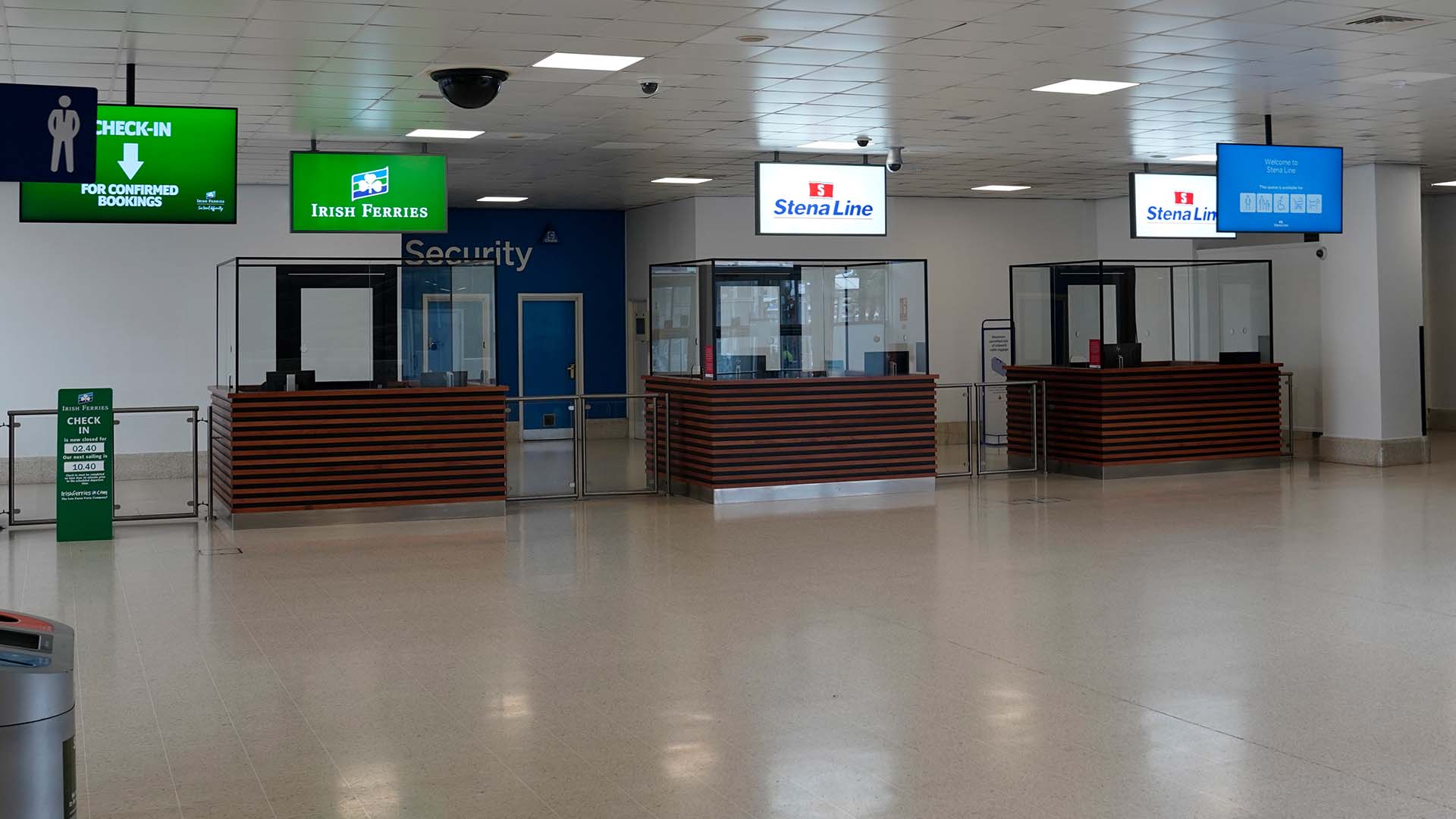
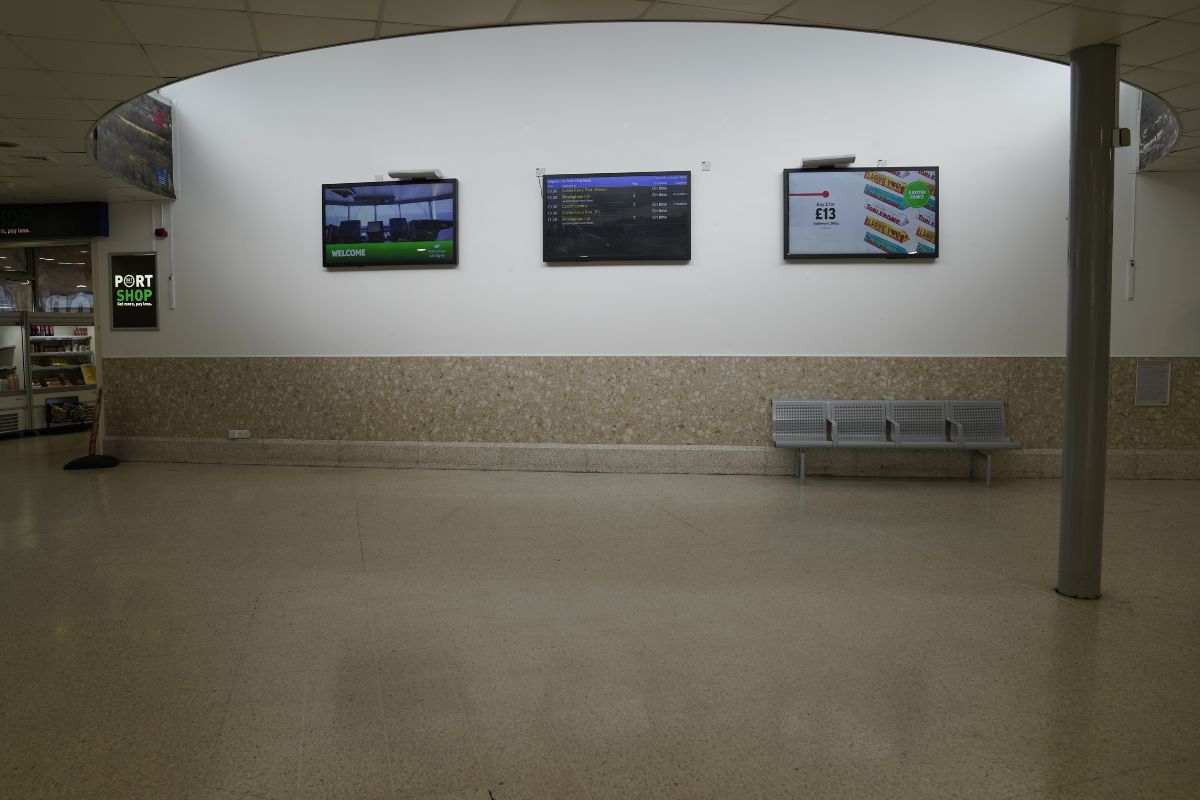
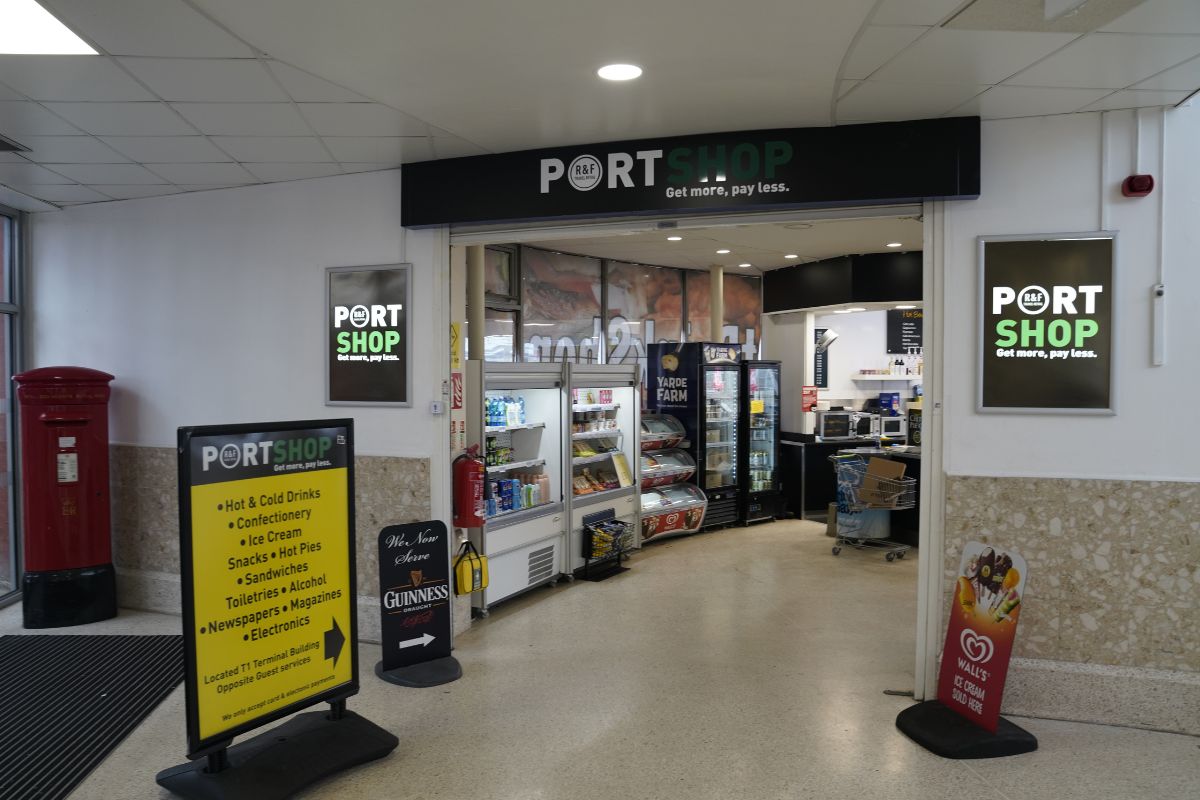
Both Stena Line and Irish Ferries operate from the same terminal building, which offers service counters, a small shop, restrooms, and comfortable seating areas.
After check-in, you’ll proceed through customs to the marshalling area, where you’ll find additional restrooms and a duty-free shop for those wishing to browse before boarding.
Inside the terminal – functional but simple.
Shop selling essentials for the ferry crossing.
Directions
Getting to Holyhead ferry port
By road, you can reach Holyhead via the A55 dual carriageway, also known as the North Wales Expressway. Near the end of this route, you'll see the first (green) signs indicating directions to the ferry terminals of both companies.
Upon reaching the roundabout at the end of the A55, take the third exit on the left, which essentially continues straight on the same road.
Then, take the first right turn, crossing the bridge over the railway.
After descending from the bridge, turn immediately left and proceed until you reach a small roundabout (here you also find long term parking 1 & 2).
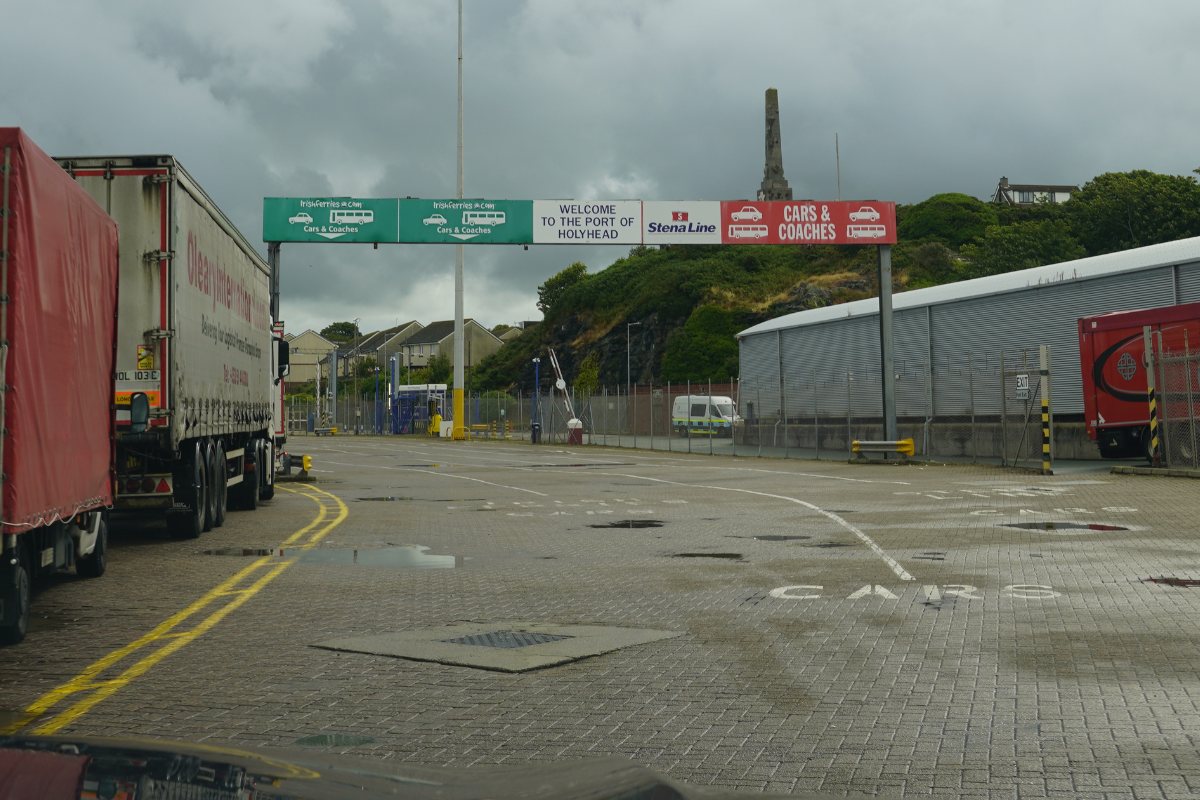
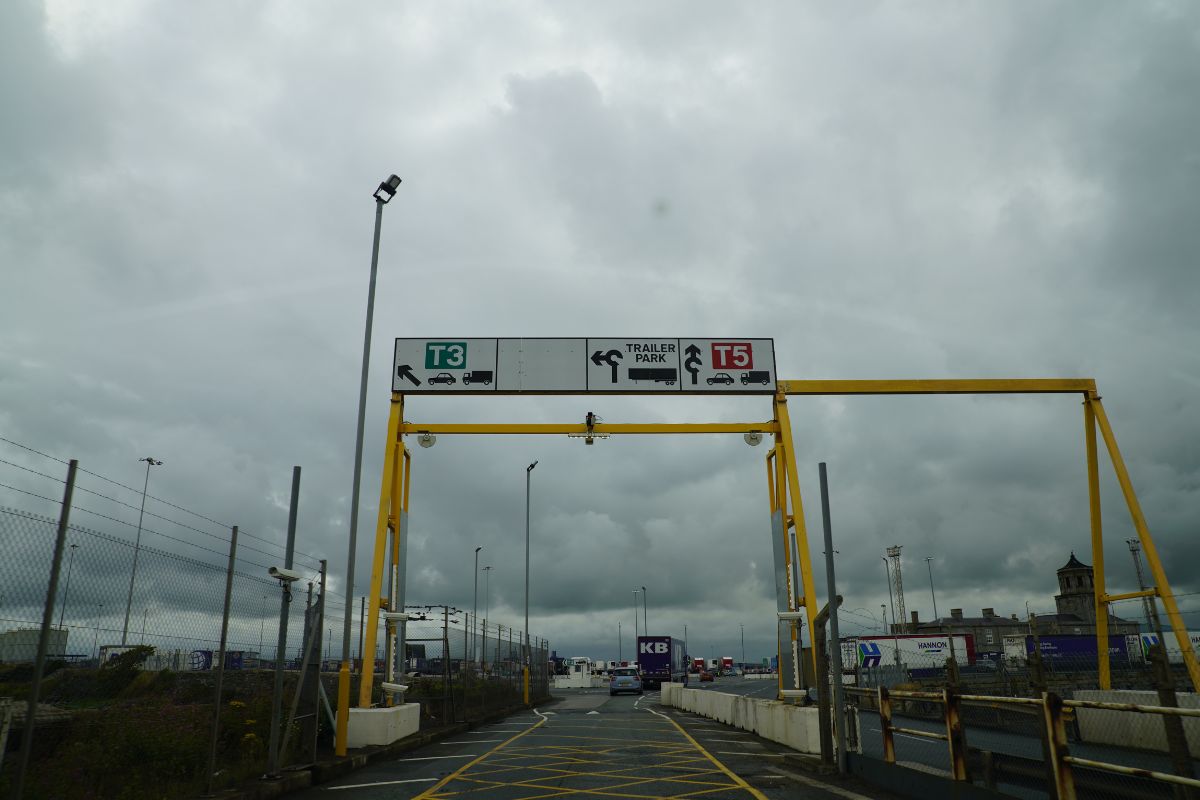
At this roundabout, the first exit leads to a terminal area where you can park for a maximum of 20 minutes. The second exit directs you to the sorting lanes for the ferry: freight traffic to the left, passenger vehicles to the right.
The terminal is located next to Holyhead train station, making it very easy to travel to Holyhead by train and then transfer directly to the ferry. This option can also be more cost-effective, as bringing a car on board a ferry is generally more expensive than purchasing foot passenger tickets.
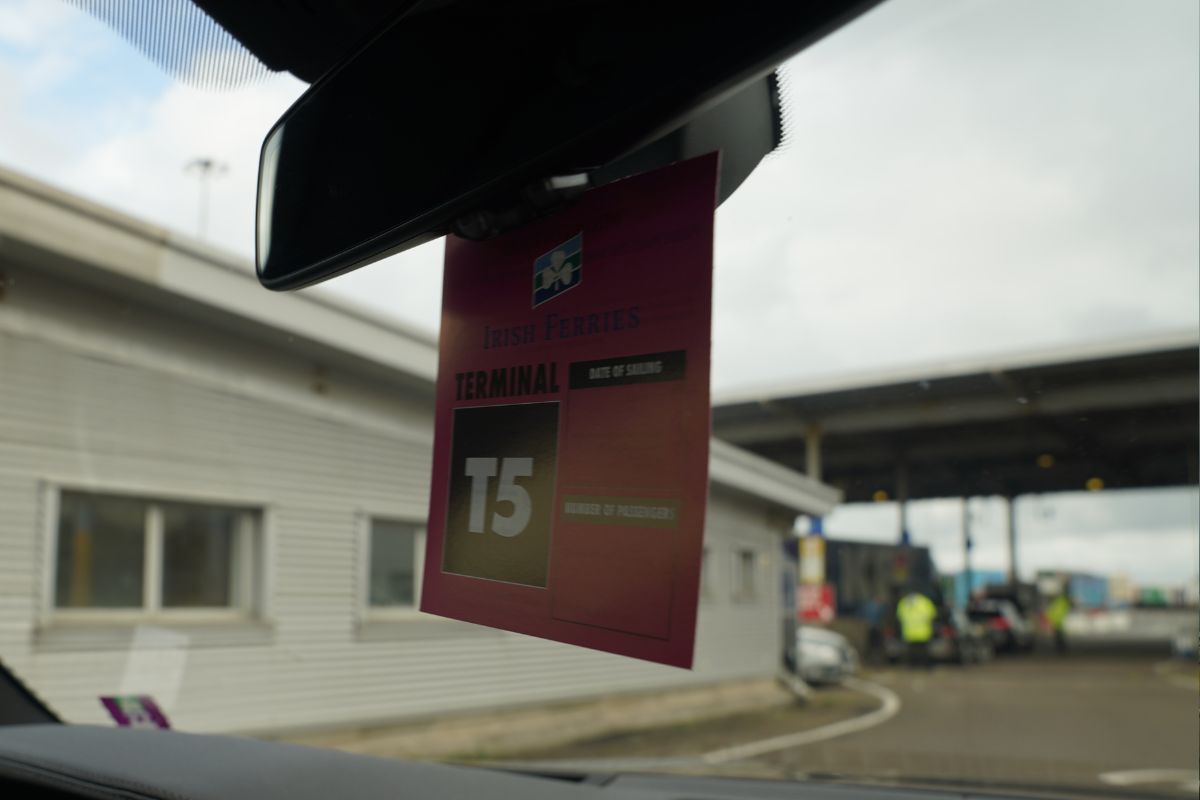
At check-in, you’ll receive a hanger for your rear-view mirror indicating which route to follow. You’ll then pass through customs, where checks can be thorough, so make sure you’re aware of what you’re allowed to bring into Ireland.
After clearing customs, you’ll continue to the marshalling area, where you’ll wait until it’s time to board the ferry. Here you’ll also find restrooms and, for those interested, a duty-free shop.
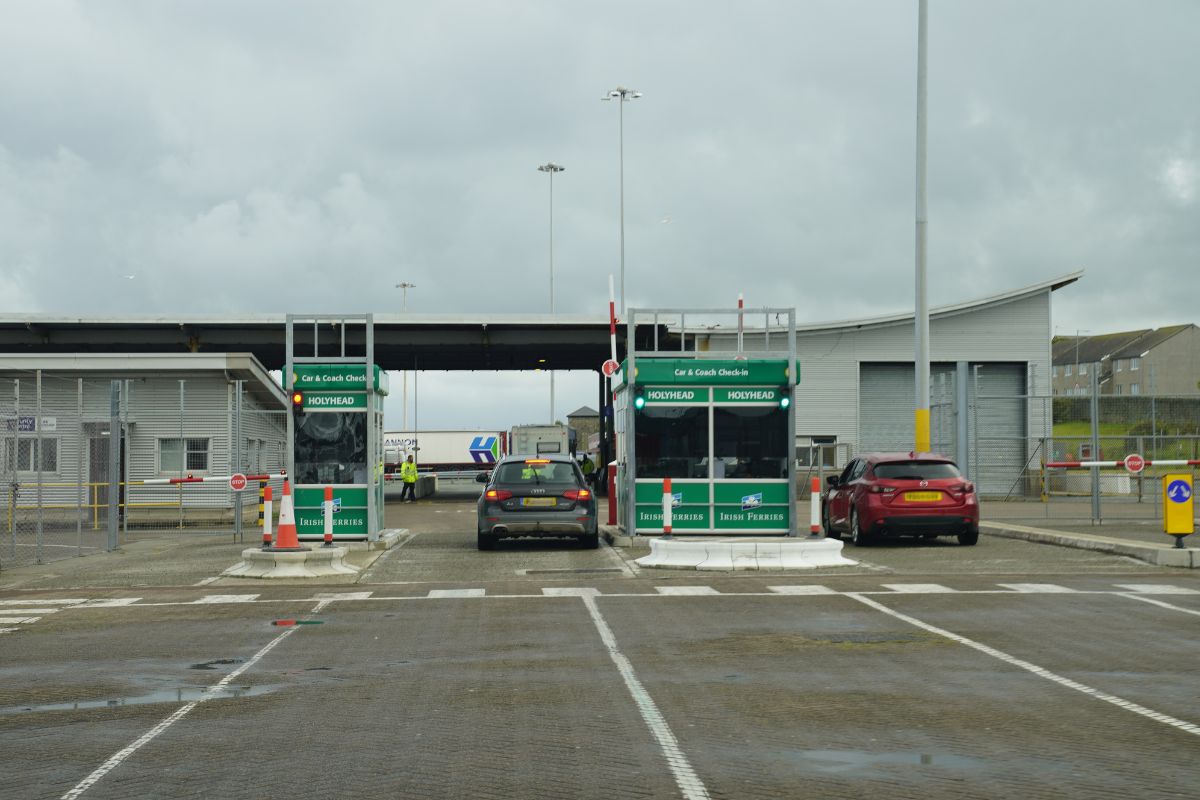
Irish Ferries check-in gate in Holyhead.
Hanger colours and numbers show where each car should park.
Here you can follow the correct route towards the ferry departure point.
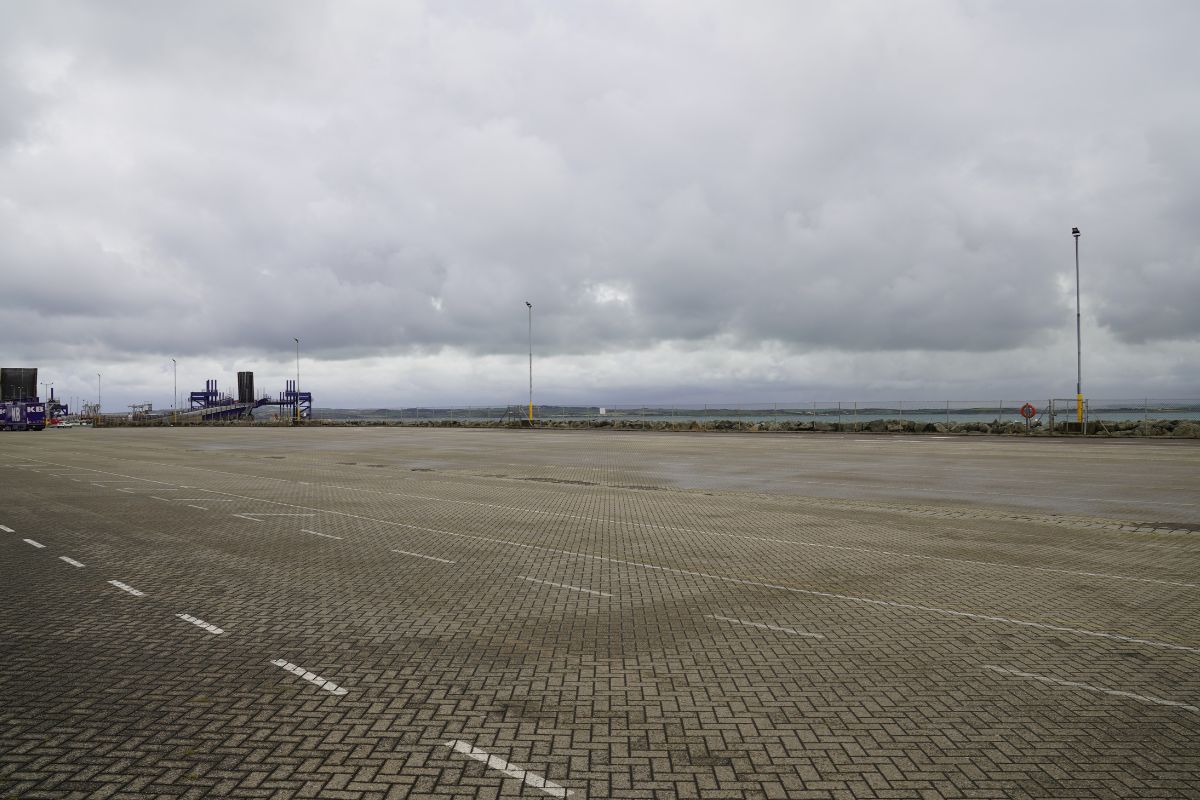
Ramp for vehicle boarding visible in the distance.
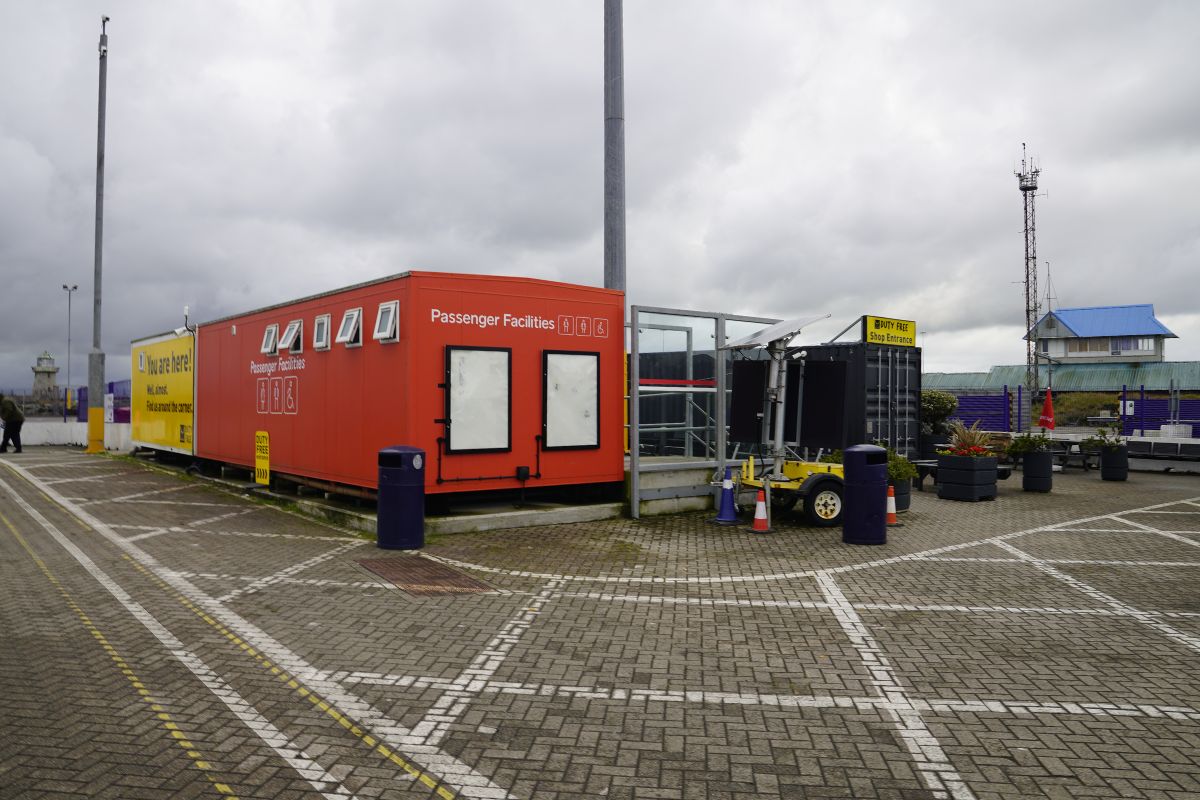
Simple container setup with restrooms and a duty-free shop in the harbour.
Park your car before you sail
There are several parking options at the port. You can park short-term near the terminal, and there are also two long-term parking areas. Electric cars can be charged near the terminal building. Read more about the parking locations and how they work.
Arriving in Holyhead offers a distinctly different experience compared to departing from the bustling metropolis of Dublin. In contrast to Dublin's extensive urban landscape, Holyhead is a much smaller and quieter village, which one can quickly leave. Just a few turns take you onto the A55, also known as the North Wales Expressway, leading directly to Chester before transitioning into the motorway towards Liverpool.
Moreover, Holyhead provides rail connections to various cities in Britain, including a direct train service to London, which takes approximately four hours. This efficient rail network makes travelling without a car quite appealing, especially for those arriving via ferry and looking to explore the UK further.
Answers to the most common questions about the Holyhead to Dublin ferry
Frequently Asked Questions
How long is the crossing from Holyhead to Dublin?
The exact sailing time depends on weather conditions. On average, the cruise ferry takes around 3 hours and 15 minutes. The Dublin Swift, the Fast Ferry operated by Irish Ferries, is quicker and completes the crossing in about 1 hour and 50 minutes.
What is the distance between Holyhead and Dublin?
The distance from the ferry pier in Holyhead to the ferry terminal in Dublin is about 65.75 miles, or 105.80 kilometers. The ships do not sail in a perfectly straight line, but this route is known for being very direct. Only in Holyhead do vessels need to steer slightly around the pier.
How many sailings are there per day?
Depending on the day, there are between 8 and 12 sailings operated by Irish Ferries and Stena Line. During the winter months, the number of departures is lower due to maintenance work. In the busy summer season, almost all ships are in full operation.
What is the difference between the Fast Ferry and the cruise ferry?
The Fast Ferry is much faster but less stable in rough weather. It offers fewer onboard facilities, although you hardly need them because the journey is short. The cruise ferry provides a more comfortable and stable crossing and is rarely cancelled except during severe storms on the Irish Sea.
Which company is better: Irish Ferries or Stena Line?
The travel experience is very similar. Irish Ferries has the advantage of offering a Fast Ferry, while Stena Line is known for modern and stable vessels. In practice, most travellers choose based on price and departure time.
What does the Holyhead to Dublin ferry cost on average?
A car with two passengers usually costs between €140 and €230, depending on season and availability. Prices can rise significantly during the busy summer months, especially if you book late.
How early should I check in?
Both ferry companies use strict check in deadlines to avoid delays. This allows time for passport control and ensures vehicles and foot passengers are in the correct lanes before boarding.
With a car: at least 60 to 90 minutes before departure
As a foot passenger: 45 to 60 minutes before departure