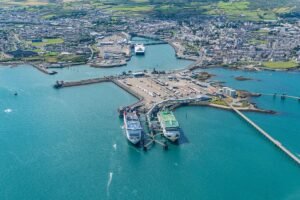
Ferries arrive in Dublin's ferry port from France and the United Kingdom, with the route to Holyhead in Wales being the busiest connection.
Terminal overview
Ferry terminal Dublin
You can access the Dublin Port area by bus, taxi, or your own vehicle. Short-term parking is available near the terminal for brief drop-offs or quick visits.
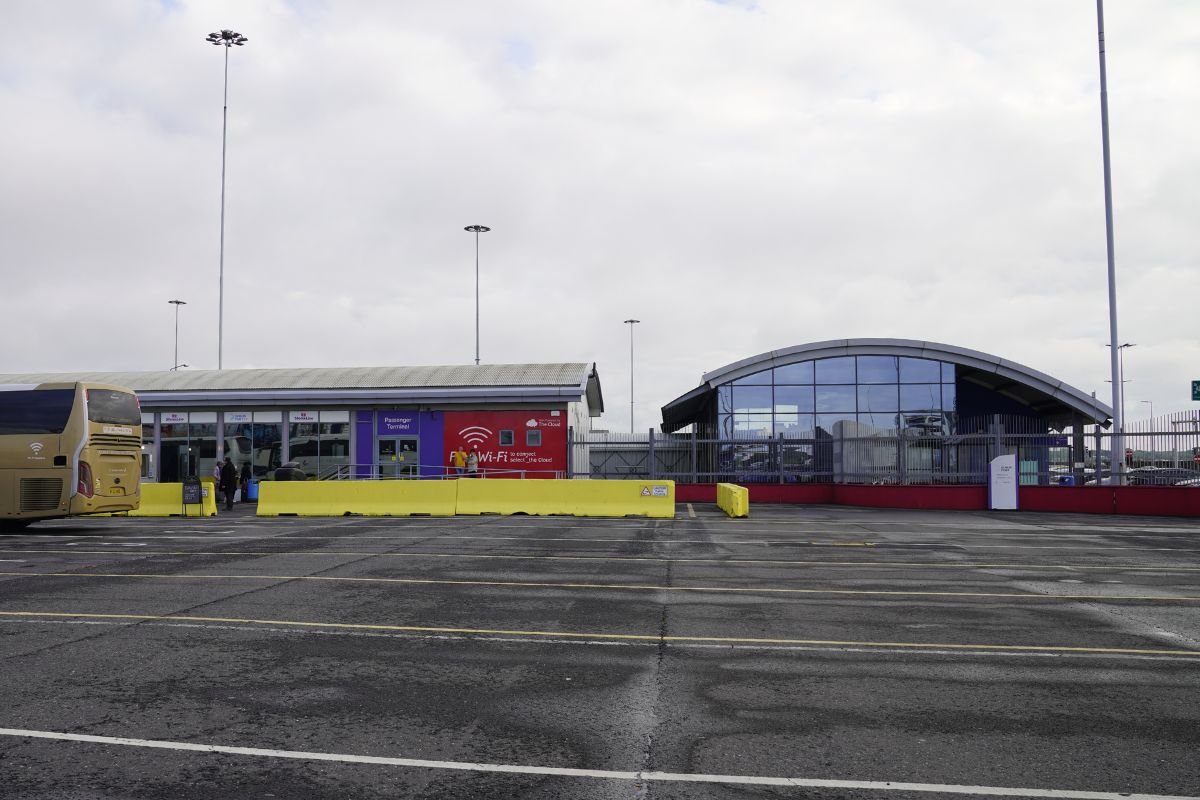
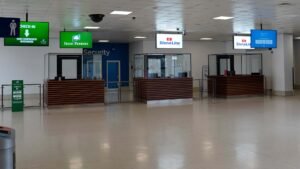
Stena Line operates from Terminal 2, while Irish Ferries uses Terminal 1. Both terminals offer service counters, seating areas, restrooms, and basic passenger facilities.
After check-in, you will proceed through security and customs to the marshalling area, where additional restrooms are available. A duty-free shop is accessible for passengers who wish to browse before boarding.
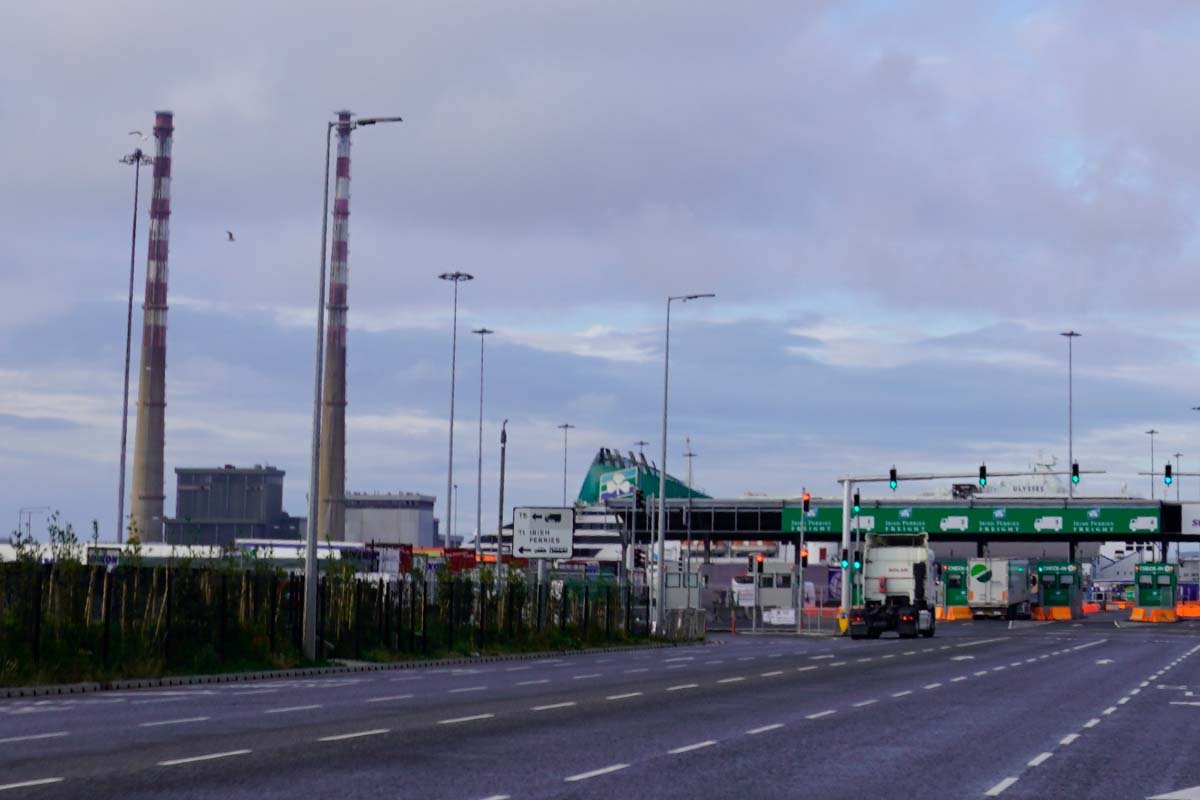
Truck check-in area for Irish Ferries with ferry and power station in the background.
Directions
Getting to Dublin ferry port
Getting to Dublin Port: By road, Dublin Port is easily reached via the M50 ring road and the Dublin Port Tunnel, which provides fast and direct access from the motorway network into the port area. As you approach the tunnel or city centre, you will see clear (green and white) signs indicating directions to the ferry terminals.
After exiting the Dublin Port Tunnel, follow the signs for Terminal 1 (Irish Ferries) or Terminal 2 (Stena Line). Continue straight along the main port access road until you reach a series of junctions directing you toward your specific terminal.
For Terminal 2 (Stena Line), keep right at the fork and follow the signs guiding you to the vehicle check-in area. Shortly before reaching the terminal, you will pass designated long-stay parking areas.
At the terminal entrance, signage will separate freight traffic to the left and passenger vehicles to the right, leading you into the appropriate sorting lanes for check-in.
Dublin Port has two main ferry terminals used for passenger services. Ferry Terminal 1 is operated by Irish Ferries, while Ferry Terminal 2 serves Stena Line. Both terminals are located within the main port area. Upon arrival, clear signage directs passengers to customs, baggage collection, and onward transportation options, including taxis, buses, and car rental services. Facilities at both terminals include restrooms, waiting areas, and information desks.
Allow extra time for security and boarding procedures
Check-in and Boarding
Make sure to arrive at the port on time. The latest check-in time depends on both the ferry company and your mode of transport.
At check-in, you’ll receive a hanger for your rear-view mirror indicating which route to follow. You’ll then pass through customs, where checks can be thorough, so make sure you’re aware of what you’re allowed to bring into Ireland.
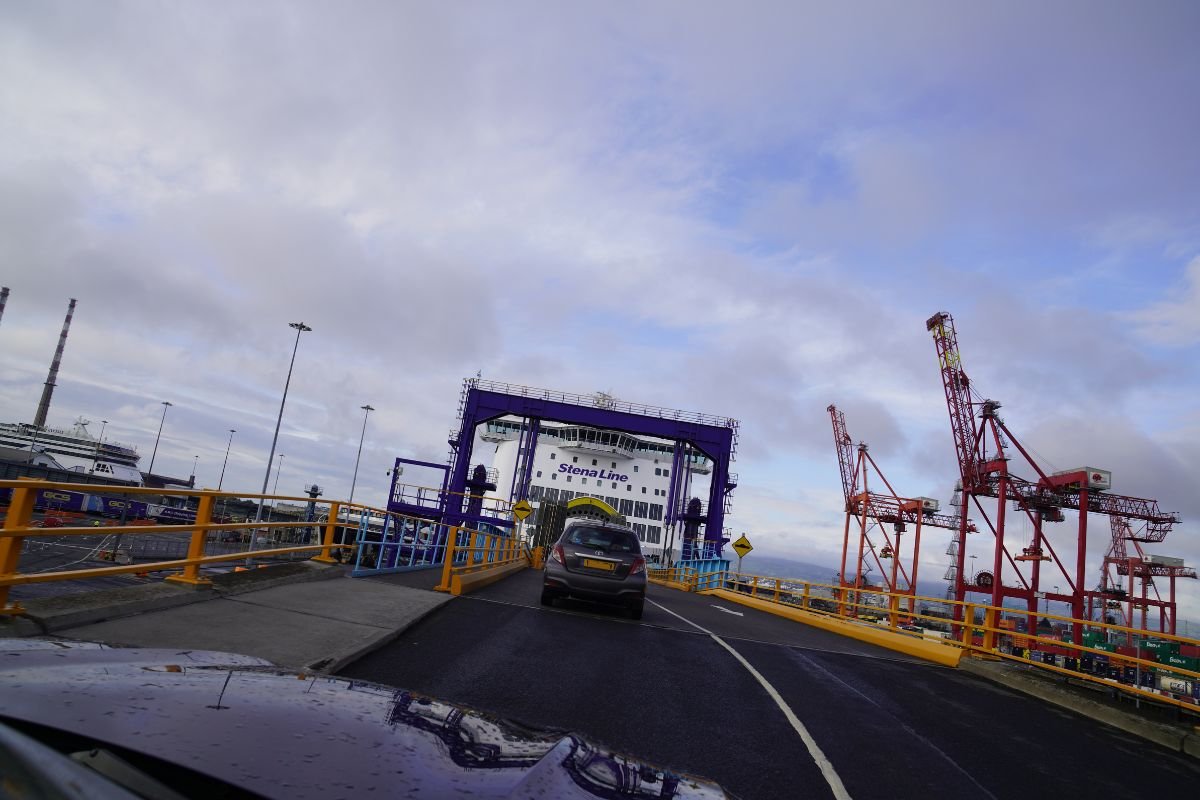
After clearing customs, you’ll continue to the marshalling area, where you’ll wait until it’s time to board the ferry. Here you’ll also find restrooms and, for those interested, a duty-free shop.
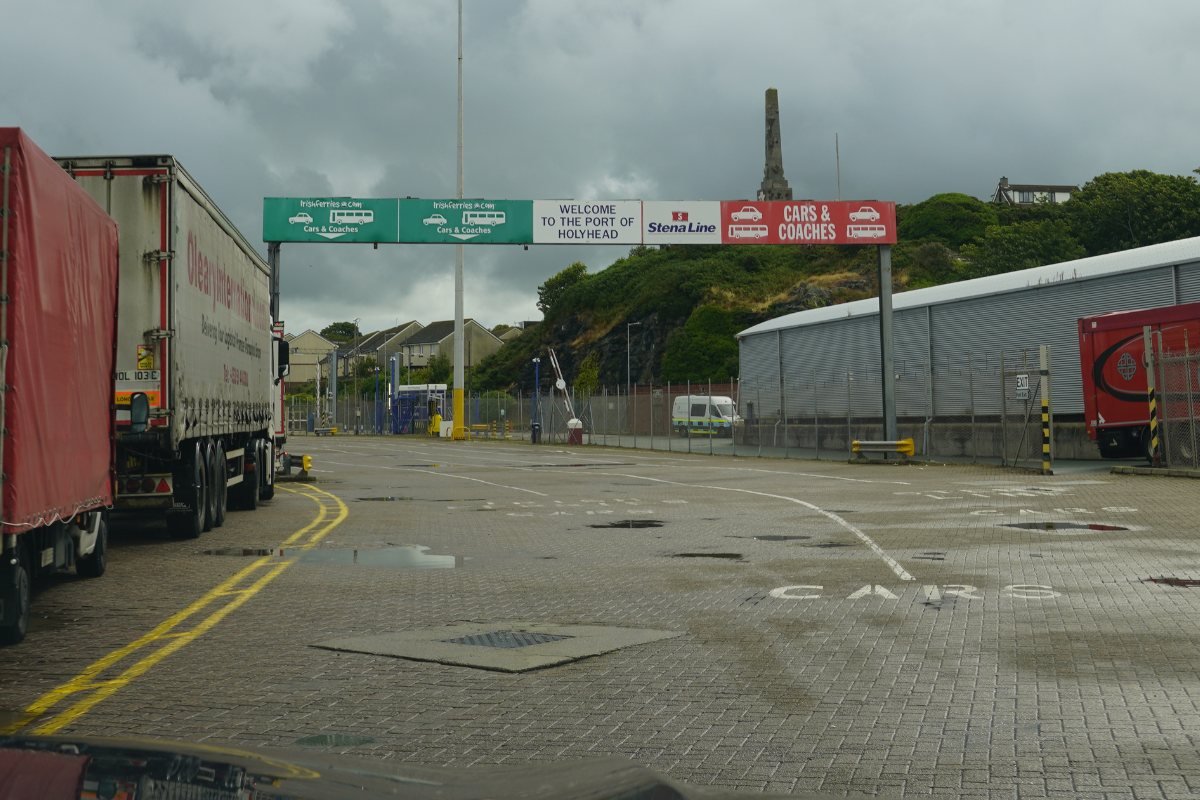
Arrival in Holyhead
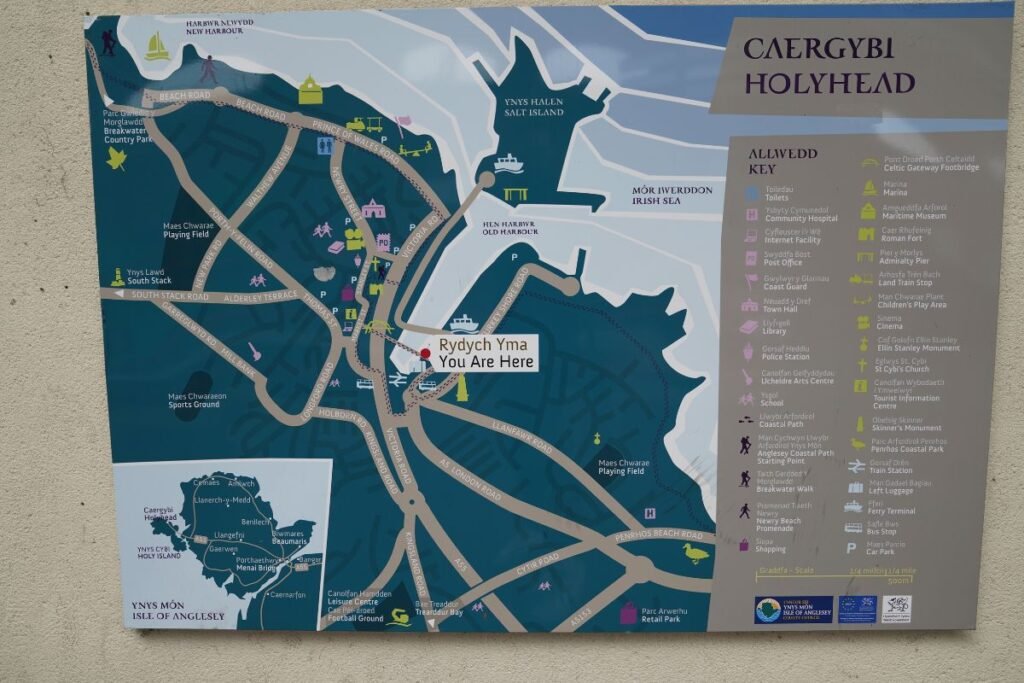
Arriving in Holyhead offers a distinctly different experience compared to departing from the bustling metropolis of Dublin. In contrast to Dublin's extensive urban landscape, Holyhead is a much smaller and quieter village, which one can quickly leave. Just a few turns take you onto the A55, also known as the North Wales Expressway, leading directly to Chester before transitioning into the motorway towards Liverpool.
Moreover, Holyhead provides rail connections to various cities in Britain, including a direct train service to London, which takes approximately four hours. This efficient rail network makes travelling without a car quite appealing, especially for those arriving via ferry and looking to explore the UK further.